



Food contamination happens when harmful germs or unwanted matter get into food. In a food workplace, contamination can happen during normal tasks if safe hygiene habits are not followed. A person may look clean and still spread germs from their hands, clothing, coughs, wounds, or the items they touch.
Food can also become contaminated through small everyday actions. Touching your face, handling a phone, coughing near food, or working with dirty hands can all move germs from one place to another. When this happens, food, work surfaces, and equipment can all become unsafe.
Preventing contamination means understanding how germs spread and stopping that transfer before it reaches food.
How Contamination Happens at Work
Contamination often happens through contact. Germs can move from people to food, from objects to food, and from one surface to another. This is why personal hygiene is such an important part of food safety.
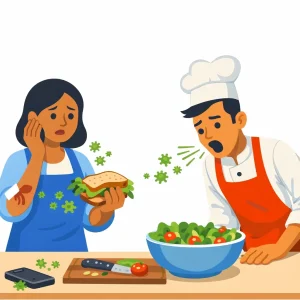
Common ways contamination can happen include:
- touching food with unclean hands
- touching contaminated items and then handling food
- coughing or sneezing near food or food-contact surfaces
- leaving wounds or cuts uncovered
- wearing dirty clothing in food areas
- bringing phones or other personal items into food areas
- failing to follow basic hygiene habits during the workday
Even a brief lapse can create a risk. If someone touches a contaminated surface and then touches equipment, utensils, or ready-to-eat food, germs can spread quickly through the work area.
Why Poor Hygiene Creates Risk
Poor hygiene allows germs to move from a worker to food. This may happen without the worker realizing it. Hands are one of the biggest risk points because they touch many different things throughout the day.
For example, a worker may touch their face, clothing, phone, or another unclean item and then return to food preparation. If they do not clean their hands and correct the issue, contamination can be transferred directly to food or to a surface that later touches food.
This is why hygiene is not only about looking professional. It is a daily safety practice that helps reduce the spread of illness and protect food from contamination.
Common Sources of Contamination
In food work, contamination can come from routine behavior as much as from obvious mistakes. Learners should pay attention to the small actions that happen often during a shift.
Common contamination sources include:
- unwashed or poorly washed hands
- coughs and sneezes
- uncovered cuts, sores, or wounds
- dirty or unsuitable work clothing
- personal items such as phones in food areas
- touching surfaces or equipment that may be contaminated
- poor personal habits during food handling
These sources matter because germs do not stay in one place. Once transferred, they can spread to food, utensils, benches, handles, and other workers.
Everyday Behaviors That Help Prevent Contamination
Preventing contamination depends on consistent habits. Safe behavior must be followed throughout the shift, not just at the start of work.
Important habits include:
- keeping yourself clean and maintaining good personal hygiene
- washing hands at the right times
- avoiding unnecessary touching of the face, hair, or body while working
- keeping phones and personal items out of food areas
- covering coughs and sneezes properly
- making sure cuts and wounds are covered
- wearing clean and appropriate work clothing
- staying aware of what you have touched before handling food
These habits reduce the chance that germs will move from a person or object into food.
Small Lapses Can Have Big Consequences
One of the most important ideas in food safety is that contamination does not always come from major mistakes. Very small lapses can create real risk. A worker may think a quick touch, brief cough, or short distraction does not matter, but these moments can spread germs to food or surfaces.
Because of this, food safety depends on consistency. Safe hygiene practices must become routine. The goal is to prevent contamination before it starts, rather than reacting after food or equipment has already been exposed.
Professional Responsibility in Food Areas
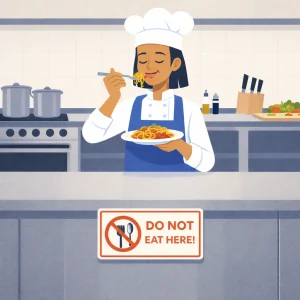
Everyone working with food has a responsibility to protect it from contamination. Personal behavior affects not only the worker, but also coworkers, customers, and the safety of the food being prepared.
A professional approach means following hygiene rules at all times, thinking about how germs may spread during normal tasks, correcting unsafe habits immediately, and treating every food area as a place where contamination must be controlled.
When workers stay aware of their actions, they are more likely to stop contamination pathways before food is affected.
Key Points to Remember
- Food contamination happens when harmful germs or unwanted matter get into food.
- Contamination can happen during normal work activities.
- Hands, coughs, wounds, clothing, and personal items can all spread germs.
- Touching contaminated items and then touching food, surfaces, or equipment creates risk.
- Small lapses in behavior can lead to contamination.
- Good personal hygiene and consistent safe habits help prevent the spread of illness.