



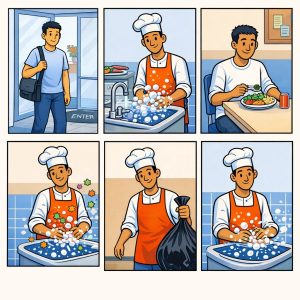
Handwashing is one of the most important daily habits in a food workplace. Even when hands look clean, they can carry dirt, bacteria, viruses, and other contaminants that can spread to food, equipment, and surfaces.
This means handwashing is not only about washing well. It is also about washing at the right times. In food work, many routine actions can contaminate your hands without you noticing. Knowing these moments helps you break the chain of contamination before it reaches food.
Why timing matters
Hands move constantly during a shift. You may touch food, tools, packaging, your face, waste, cleaning items, doors, or shared surfaces in only a few minutes. Each contact creates a chance for contamination to spread.
If you wash your hands only occasionally, harmful microorganisms can transfer from one task to another. Washing at key moments reduces this risk and supports safer food handling throughout the day.
Wash hands before starting food work
You must wash your hands before you begin work or return to food handling. Starting a task with unwashed hands can transfer contamination directly to food or food-contact surfaces.
This includes moments such as:
- before starting your shift
- before preparing food
- before handling ready-to-eat food
- before returning to work after a break
These are important reset points. Even if you have not handled food yet, your hands may have picked up contamination from personal items, doors, phones, clothing, or other surfaces.
Wash hands after using the restroom
You must wash your hands after using the restroom. This is a critical hygiene step because restroom use creates a high risk of spreading contamination.
If hands are not washed properly after using the toilet, contamination can be carried back into food areas and spread to food, equipment, and other workers. This is one of the most important handwashing moments in any food workplace.
Wash hands after touching possible sources of contamination
Many everyday actions can contaminate your hands. You should wash your hands after touching anything that may carry dirt, germs, or other contaminants.
Common examples include:
- after touching your face, hair, nose, or mouth
- after coughing, sneezing, or blowing your nose
- after handling waste or rubbish
- after touching dirty equipment or dirty surfaces
- after cleaning tasks
- after handling anything that could contaminate hands
These actions may seem small, but they can quickly spread contamination if you return to food handling without washing first.
Wash hands when changing tasks
Handwashing is needed when moving from one activity to another, especially when one task may contaminate your hands and the next involves food or clean surfaces.
For example, you should wash your hands:
- after a non-food task and before returning to food work
- after touching items in the work area that are not clean
- before handling food after doing another job
This helps prevent contamination from being carried across the workplace. A simple task change can become a food safety risk if handwashing is missed.
Wash hands after breaks and interruptions
Breaks and interruptions often involve contact with non-food areas and personal items. Because of this, hands should be washed before returning to food duties.
This includes:
- after breaks
- after leaving the food area and coming back
- after touching personal belongings
A short interruption can still lead to contamination. Always treat your return to food handling as a point where clean hands are required.
Build the habit of stopping and washing
Good hand hygiene depends on awareness. During a shift, pause and ask yourself whether your hands may have touched anything that could contaminate food.
A useful habit is to think in two simple directions:
- Wash your hands before handling food or starting food work.
- Wash your hands after anything that may contaminate them.
This habit makes handwashing more consistent and helps protect both food safety and customer health.
Common high-risk moments to remember
Keep these key times in mind during every shift:
- before starting work
- before handling food
- after using the restroom
- after breaks
- after touching your face, hair, nose, or mouth
- after coughing, sneezing, or blowing your nose
- after touching dirty items or surfaces
- after handling rubbish or waste
- after cleaning
- after any task that may contaminate your hands
These are the moments when handwashing makes the biggest difference.
Key point
Handwashing works best when it happens at the correct time. In food work, clean hands must be part of every routine, not only when hands look dirty.
By washing before food tasks and after anything that may contaminate your hands, you reduce the spread of illness and help keep food safe.